
Torture and Custodial Death
JUDICIAL MANDATE
NCHR’s Complaint Redressal function involves a quasi-judicial role, an investigative role, and a monitoring role. This function has four types of interventions and related processes, namely:
1) NCHR’s role as an inquiring body/court (in turn on complaint or suo moto)
2) NCHR’s role as an intervener in on-going court proceedings
3) NCHR’s role as an investigator into human rights violations
4) NCHR’s role as an inspector of jails and places of detention
NCHR has the powers to call witnesses, gather evidence, require furnishing of information etc. The NCHR Act provides it the opportunity to meticulously take up important human rights issues and build a substantiated and persuasive case for rights implementation.
NCHR Complaint Redressal
|
Complaint Status from December 2021 to February 2024 |
||
|
Sr. No. |
Complaints/Suo Moto |
Numbers |
|
1 |
Fresh Complaints received during the period |
1774 |
|
2 |
Cases where Suo Motu action has been taken |
396 |
|
Total |
2170 |
|
|
3 |
No. of Complaints Disposed Off |
1464 |
|
4 |
No. of Complaints Under Process |
706 |
*There were an additional 1968 complaints/Suo motu that NCHR received in the time between the first and current commission which have also been resolved
Jaranwala Incident
August 16th saw the ransacking of the city of Jaranwala in Faisalabad Division, Punjab. Within twenty-four hours, a mob of 1200 people, mostly youth had gutted a total of 17 churches and 40 homes with an additional 40+ houses vandalised and partially destroyed. NCHR’s team was the first to respond to the situation and visited the vandalised sites the following day to see first-hand the damage wrought, and to meet with district administration, religious leaders, and the families affected by the attacks.
A sentiment analysis by NCHR and partner CSO Bytes 4 All (B4A) revealed that a majority of the posts on twitter and Facebook during the day of the attack contained content that was inciting and inflammatory in nature. In response to NCHR and B4A reporting Facebook took action by removing the large volume of incendiary content from their platform.
NCHR penned an open letter to the Prime Minister outlining the findings of the visit and recommending strategies and policies for the government to adopt to prevents such incidents in the future.
NCHR repeatedly followed up with visits to Jaranwala to distribute relief packages to the families affected in the violence, including the distribution of Rs. 2 million to 80 families. The Commission also inspected the reconstruction of churches in the area, held meetings of interfaith harmony committees, and conducted sessions with heads of schools and colleges encouraging interfaith harmony. A helpline to report complaints faced by the Christian community was also set up. Read NCHR’s full report on this incident and the Commission’s response.
NCHR’s Jail Visits
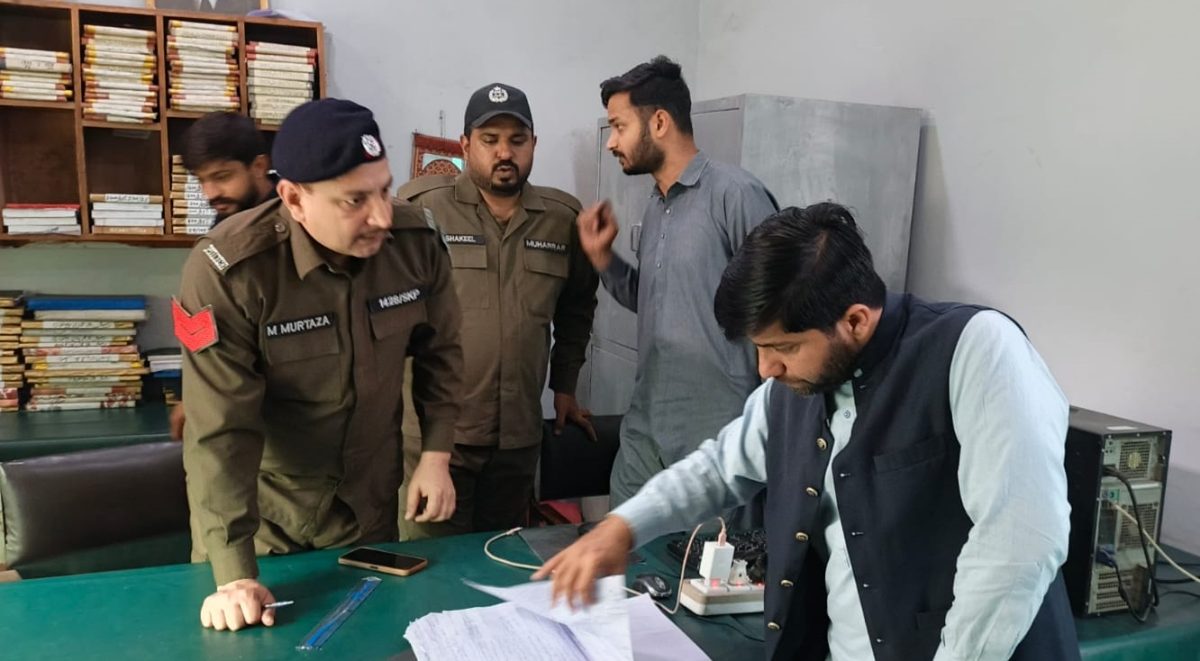
Under the NCHR Act 2012, the Commission “may visit any jail, place of detention or any other institution or place under the control of the government or its agencies, where convicts, under trial prisoners, detainees or other persons are lodged or detained.”
Prisons in Pakistan are subject to budget restraints resulting in staff shortage, with existing staff working prolonged hours that are detrimental to their health, and outdated infrastructure and facilities at jails. Overcrowded cells, poor ventilation systems, outdated medical and educational facilities, and lack of recreational space create an abysmal atmosphere for the inmates. A large percentage of Pakistan’s prison population is still under-trial, with slow trials and discrepancies in court proceedings exacerbating the existing issue of overcrowding at prisons.
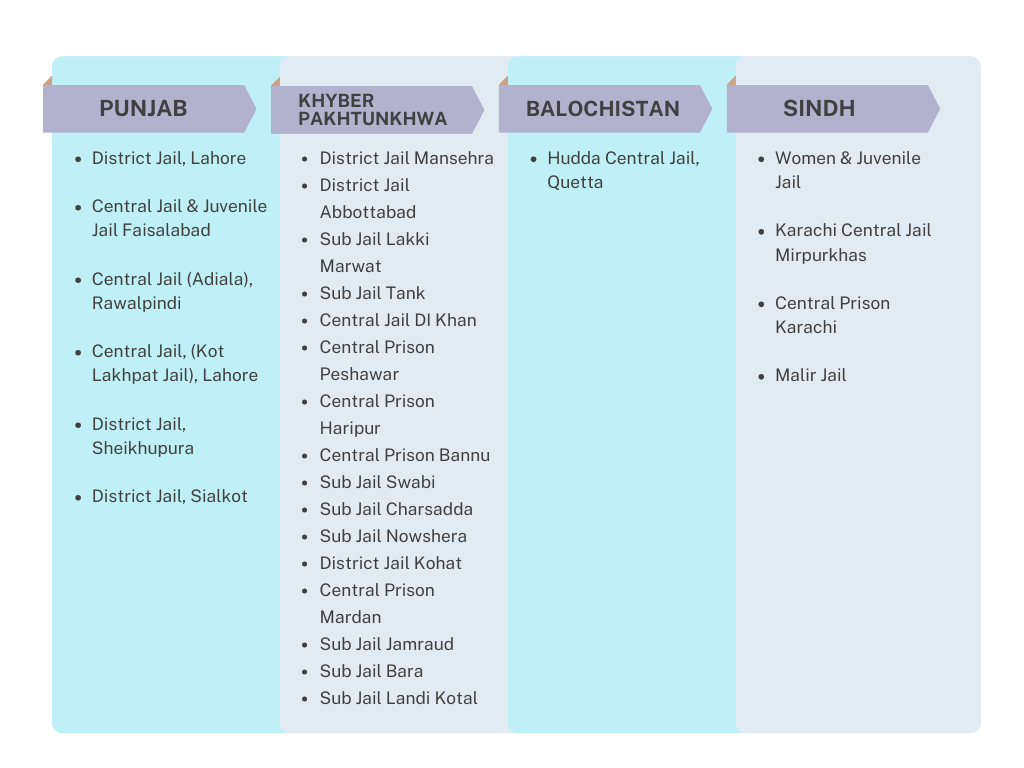
List of Jails NCHR visited across Pakistan (multiple visits):
NCHR’s Inquiry into Torture at Adiala Jail
NCHR investigated allegations of torture at Central Jail (Adiala), Rawalpindi at the behest of Chief Justice Athar Minallah on the basis of a complaint of custodial torture filed by Ms. Imtiaz Bibi before the Islamabad High Court. Following multiple visits to the jail to investigate and meet with inmates, NCHR prepared an inquiry report for the Islamabad High Court.
As a result of NCHR’s investigation and inquiry report the following actions were taken:
- Action was taken against officials working within Adiala Jail: seven officials were removed from service; four officials were suspended for 90 days; and 38 officials were transferred out of Adiala Jail
- Complaint cell set up and Oversight Committee for Adiala Jail notified by NCHR to inquire into complaints of torture
- Reactivation of Implementation Commission under the Ministry of Human Rights
- Notification of Human Rights Courts under Section 21 of the NCHR Act, 2012
- Punjab Police developed a training module on Custodial Torture & Custodial Death to be made part of the syllabus of all promotional and mandatory courses
- Torture and Custodial Death (Prevention and Punishment) Act was passed
- Amendment to the Railways Act was passed which abolished the death penalty for offences under Section 127 of the Act
- NCHR prepared a manual for police and medico-legal examiners on the best practices of investigating torture complaints based on domestic law and international standards
Juvenile Justice at Adiala Jail
During its investigation into custodial torture at Adiala Jail, NCHR took suo moto notice of the large number of under-trial prisoners and the lack of implementation of the Juvenile Justice System Act, 2018. Out of a total of 82 juvenile prisoners 79 were under trial – 29 of whom were without legal representation which was in contravention to Section 3(1) of the JJSA, 2018. NCHR included the situation of the juvenile prisoners in its inquiry report to the Islamabad High Court.
With the help of a pro bono lawyer NCHR was able to provide under-trial inmates with legal representation leading to the release of 75 children. NCHR’s intervention and recommendations also led to the first ever Notification of Juvenile Justice Committees in Islamabad under Section 10 of JJSA, 2018.
Implementation of the Torture and Custodial Death (Prevention and Punishment) Act, 2022
- NCHR was designated as the supervisory body over investigations conducted by the FIA under Sections 5 and 22.
- NCHR facilitated multi-stakeholder consultations for the development of rules under the Act, which were formally approved by the Government in November 2025, strengthening the operational framework for enforcement.
- Co-authored a comprehensive Gap Analysis of the Torture and Custodial Death Act, 2022 in collaboration with Justice Project Pakistan (JPP), identifying legislative and procedural deficiencies, including the absence of psychological torture, weak supervisory mechanisms, and coordination gaps.
- Benchmarked the Act against UNCAT, the Istanbul Protocol, the Méndez Principles, and international jurisprudence, with recommendations aimed at aligning domestic law with international standards.
- The Gap Analysis has been cited in court proceedings, reflecting NCHR’s role in strengthening legal design, not merely monitoring compliance.
- Establishment of a dedicated Legal Wing to supervise investigations under the Torture Act. Creation of a Legal Oversight Unit comprising legal officers and researchers to monitor complaints, prosecutions, and rule development related to torture prevention.
- Manual on Investigation and Documentation of Torture: NCHR prepared a manual for police officials and medico-legal examiners on best practices for investigating torture complaints, drawing on the Istanbul Protocol and the OHCHR–APF Operational Guide for National Human Rights Institutions. The manual sets standards for victim interviews and documentation of torture.
- Protocol for Handling Torture Complaints: In collaboration with Justice Project Pakistan, NCHR developed the Protocol for Receiving, Processing and Resolving Torture Complaints, outlining procedures for complaint intake, assessment, referral mechanisms, timelines, and grounds for dismissal.
- NCHR officers received targeted training from Justice Project Pakistan on torture prevention, investigation techniques, and legal responses under domestic and international law.
- NCHR drafted the Prison Reform Action plan for the Chief Justice of Pakistan.
- Case Interventions and Accountability:
- Took cognisance of the custodial death of Mr. Shaukat Ludhiana (2024), conducted field visits, engaged with the victim’s family and district police, and directed FIA to initiate proceedings under the Torture Act.
- Initiated suo motu proceedings in the extrajudicial killing of Dr. Shahnawaz Kumbhar (2024), resulting in FIRs against 21 police officials and one civilian under the PPC, ATA, and the Torture Act.
- Suo Moto Notice – Sexual Assault and Torture of Two Children: NCHR intervened in a case involving a police Sub-Inspector accused of sexual assault and torture. Following the Commission’s action, the accused was arrested, a medical examination conducted at PIMS Hospital, and both criminal proceedings and departmental inquiry were initiated.
- Suo Moto Notice – Police Torture in Quetta: NCHR Balochistan intervened in a case involving the torture of a citizen by police personnel from Quaid Abad Police Station, Aalamdar Road, Quetta.
- Investigations Initiated through Suo Moto Powers: January 2025 Sherakot, Lahore custodial torture inquiry, initiated without a formal complaint. Follow-up actions including correspondence with FIA on cases such as the Suraiyya Bibi encounter killings (June 2024) and alleged torture of Sanawar and Muhammad Hasnain in Sargodha (May 2025).
Investigation into May 9th Protest-Related Detentions
- Launched a multi-pronged investigation report into allegations of torture and sexual abuse of detainees arrested following the May 9, 2023 protests.
- Engaged with federal and provincial governments, police, jail authorities, and civil society organisations to gather information and safeguard detainees’ fundamental rights.
- Conducted prison visits through a Jail Oversight Committee comprising a female doctor, forensic expert, and civil society representatives.
- Examined arrest procedures, police lock-up detention, jail admission processes, searches, medical records, safety measures, and access to complaints mechanisms.
- Prepared and submitted a detailed investigation report with actionable recommendations to the Prime Minister’s Office, relevant ministries, and provincial departments.
- Findings led to the revival of the Jail Reform Implementation Commission, with NCHR presenting its recommendations and timelines issued to ensure compliance.
Investigation of Rehab Centres
- NCHR received a complaint concerning a 35-year-old woman lawyer who had been forcibly admitted to a private rehabilitation centre by her brothers under the pretext of “treatment.”
- This case highlighted broader systemic issues related to the operation, monitoring, and accountability of rehabilitation centres, as well as the protection of individuals’ rights within such institutions.
- In response, NCHR undertook a series of legal, investigative, and advocacy measures:
- Secured the rescue of the victim from unlawful confinement
- Issued a public call for information and testimonials to identify similar cases
- Conducted three hearings with the Islamabad Healthcare Regulatory Authority (IHRA)
- Held consultations with the Secretary, Ministry of National Health Services
- Initiated a joint investigation with IHRA into rehabilitation centres
- Launched a public advocacy campaign to raise awareness on forced admissions and patients’ rights
- NCHR’s intervention led to significant outcomes at both case-specific and systemic levels:
- Rescue of 9 additional individuals who had been forcibly admitted to rehabilitation centres
- Publication of a comprehensive fact-finding report highlighting regulatory gaps and rights violations
- Initiation of policy and administrative reforms within IHRA to strengthen oversight mechanisms
- Advocacy contributing to the decriminalisation of suicide, reframing it as a mental health issue rather than a criminal offence
- Recommendation and support for a Prime Minister’s mental health helpline
- Drafting of Pakistan’s first mental health bill to improve legal protections and service delivery